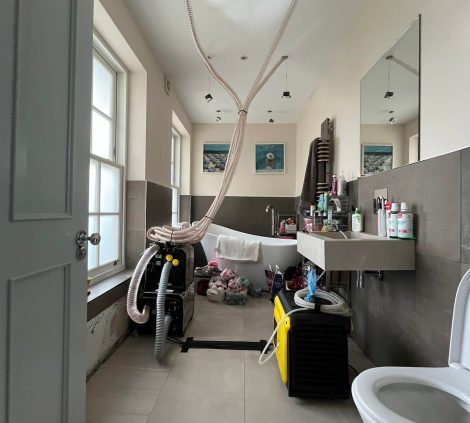
Mechanical drying is typically required to return structures to pre-incident moisture conditions, most commonly following a water damage incident such as an escape of water (EOW), flooding or a leak.
It may also be required following a fire damage incident, where excess moisture has been introduced either through exposure to the elements due to fire-related structural damage, or the methods used to extinguish the fire, which can introduce significant volumes of water into the building fabric.
In addition to reactive losses, construction drying is common across the UK. During construction and refurbishment works, buildings are frequently exposed to the elements for prolonged periods.
With rainfall present for much of the year and increasing pressure on completion deadlines, there is often insufficient time for natural ventilation or moisture dissipation to occur. As a result, excess moisture within new builds and developments is common and can lead to defects if not addressed correctly.
Conventional drying typically involves the introduction of a combination of controlled air movement and dehumidification. Drying equipment is used to process the affected air mass, encouraging moisture to evaporate from damp materials into the atmosphere, where it is then mechanically removed. This method is commonly used for larger or more uniformly affected areas.
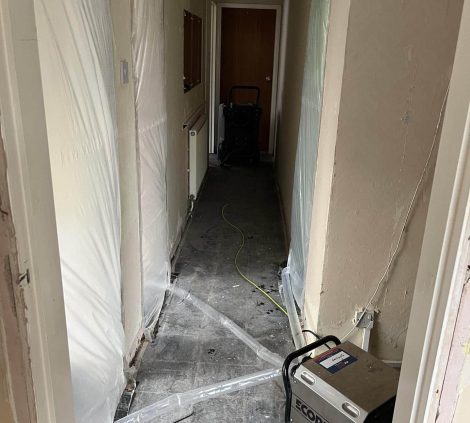
Target drying is used to address localised areas of moisture ingress, reducing the overall volume of air being processed. This is often achieved using temporary containment or sheeting, isolating the affected zone. By reducing the size of the air mass, this method can shorten programme durations, reduce energy consumption and running costs, and minimise disruption to unaffected areas.
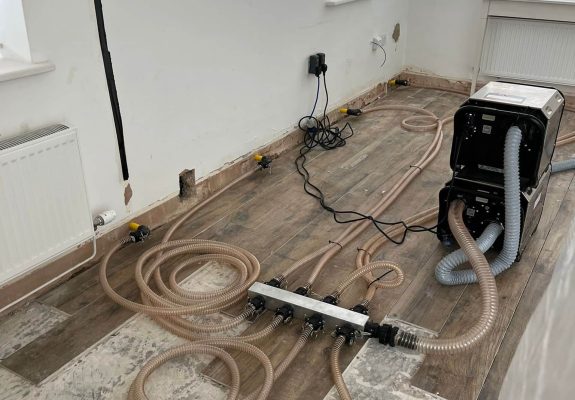
Injection drying is introduced where moisture is trapped within layered or voided constructions, which is particularly common in modern buildings. This method allows moisture to be extracted from concealed spaces without the need for destructive access, helping to preserve finishes and often allowing continued use or operation of the space while drying is underway.
Where voids have been affected by contaminants (e.g. black water), negative pressure injection drying can also be used to flush and extract contaminants prior to, or as part of, the drying programme.
The purpose of a mechanical drying programme is to remove excess moisture and return materials to safe, acceptable, or pre-incident moisture levels, thereby preventing secondary damage such as mould growth, material deterioration, corrosion, or odour issues.
In most drying programmes, it is the introduction and management of heat that increases the rate of evaporation. Drying equipment accelerates evaporation, encourages moisture into the surrounding atmosphere, and mechanically processes and removes that moisture from the environment.
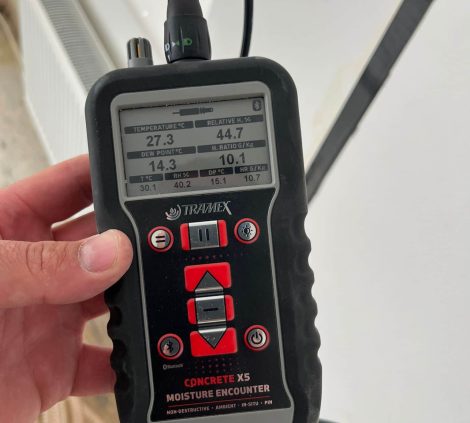
To determine a suitable drying strategy and equipment specification, several key factors must be understood, including:
The requirement for remedial or preparatory treatments, such as flushing, sanitising, or mould remediation, prior to or alongside drying works