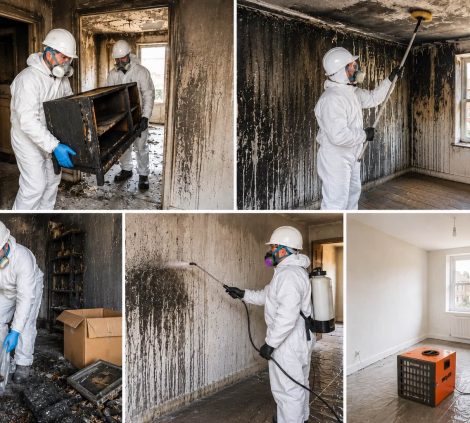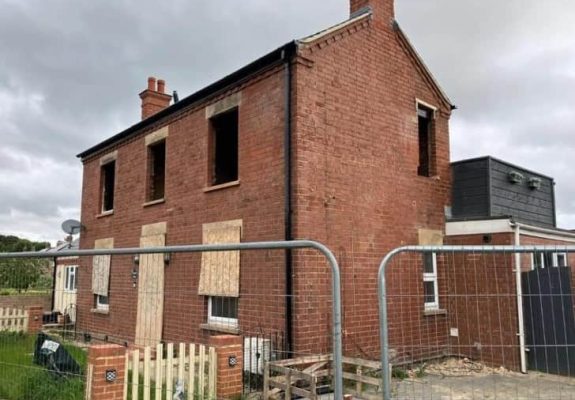
Fire and smoke damage can leave properties severely compromised, uninhabitable, and may result in significant business interruption if a commercial or retail property.
The impact of a fire loss extends far beyond visible damage, often affecting the structural integrity, internal environments, building services, and contents within the property.
In addition to aesthetic damage, fires produce complex residues such as soot and chemical by-products. These contaminants can pose a risk to human health, with exposure linked to irritants, toxins, and potential carcinogens. If left untreated, contamination can continue to migrate through a building and contribute to long-term deterioration, corrosion, and in some cases irreversible damage to materials and finishes.
Effective fire and smoke damage restoration begins with a clear understanding of the incident itself. Each fire loss is unique, and recommendations must be tailored accordingly. Key considerations include:
Smoke and heat damage can extend far beyond the immediate area of origin. Due to pressure differentials created during a fire event, contaminants can migrate through wall voids, ceiling spaces, service risers, and ventilation systems, often affecting adjoining rooms or neighbouring properties.
Sampling methods can be used to help in assessing the risk of delayed damage as well as directing appropriate decontamination locations and methods.
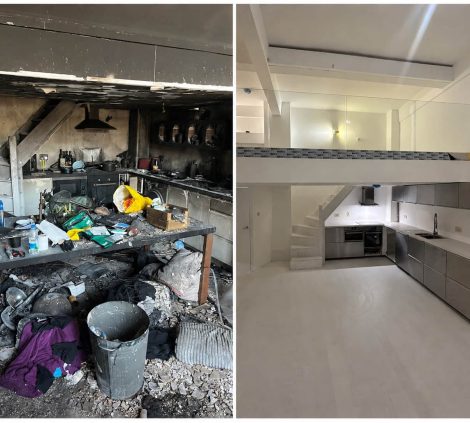
Early intervention is critical to limiting secondary damage and stabilising the environment. Typical initial mitigation measures may include:
Environmental control is then established to prevent further deterioration. This may include installation of dehumidifiers and deployment of air scrubbers with HEPA filtration to manage airborne contaminants, improve air quality, and reduce cross-contamination within the property.
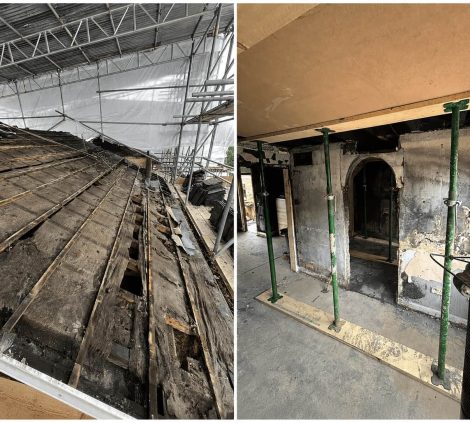
Following initial mitigation, a detailed assessment is undertaken to determine the most appropriate restoration strategy. All recommendations are bespoke to the incident, taking into account construction methods, materials affected, and the severity of contamination.
Restoration works may include a combination of enabling and preparatory works, manual decontamination, and mechanical specialist decontamination methods including media blasting, high-temperature low-pressure hydro systems, dry ice blasting, and latex peel systems.
The overarching goal of fire and smoke damage restoration is to stabilise the property, remove harmful contamination, and prepare affected areas so they are clean, safe, and ready for reinstatement works. Through early mitigation, informed assessment, and carefully selected restoration techniques, further damage can be minimised and recovery times significantly reduced.