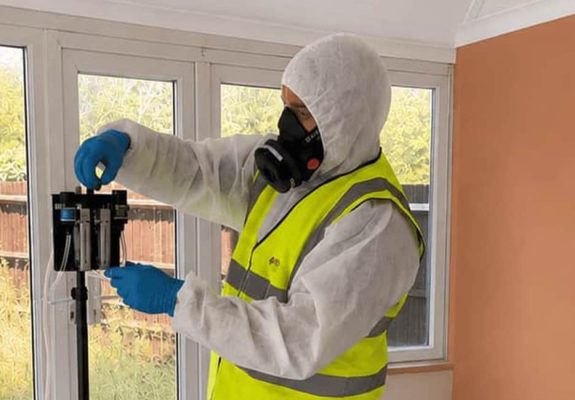
Accurate, evidence-based decision-making is at the heart of effective damage management. Our sampling services provide the technical data needed to understand the true extent of contamination, inform remediation strategies, and provide defensible evidence.
Sampling is used across fire, flood, and mould-related losses, and can be introduced at multiple stages of a project – including pre-works assessments, during active remediation, and as part of post-treatment clearance verification.
Visual inspection alone is rarely sufficient to fully characterise the nature or extent of contamination following a fire or water damage incident. Sampling provides:
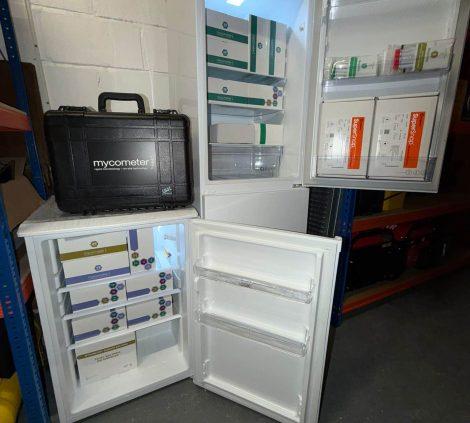
Air and surface sampling to identify and quantify mould species, assess contamination levels, and determine the appropriate remediation approach. Also used for post-treatment clearance testing.
Used to determine the category and contamination level of water involved in a loss (clean water, grey water, or black water). Category classification directly informs the health and safety protocols required and the appropriate remediation methodology.
Salts analysis helps to identify the source and mechanism of moisture ingress. The presence and distribution of soluble salts within masonry, plaster, and other substrates can indicate whether damp is caused by rising damp, penetrating damp, or condensation – enabling accurate diagnosis before remedial works commence.
Used to characterise the nature of fire residues and assess contamination levels within a property. Results inform decontamination methods and help determine whether materials can be retained or must be removed.
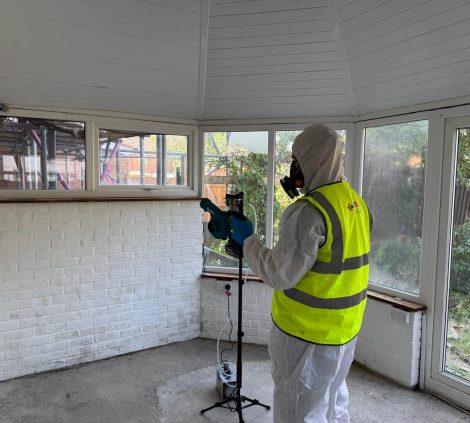
All sampling results are compiled into structured reports, with clear findings, analysis, and recommendations.
Reports are suitable for sharing with insurers, loss adjusters, and other stakeholders, and form part of the full audit trail supporting the claim.